Where have Toronto’s caricature artists gone?
By LARA O’KEEFE
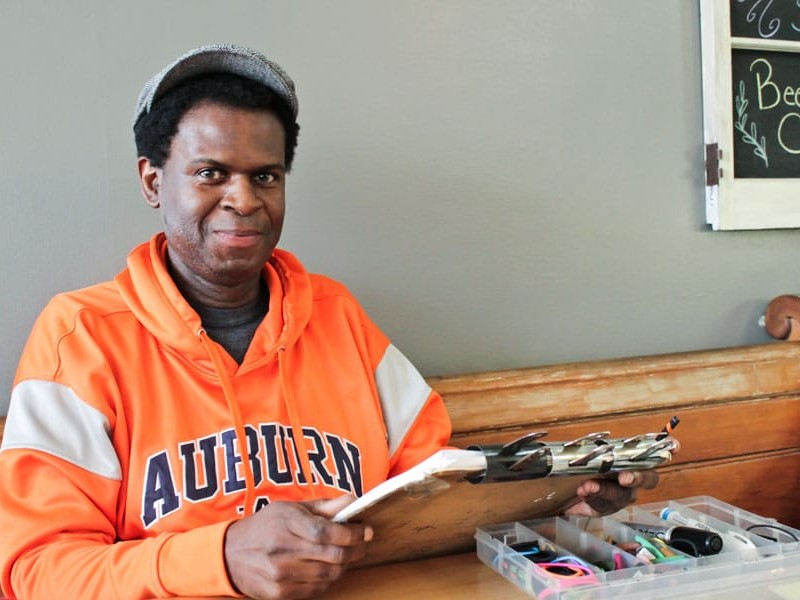
At one time, Danforth resident Pat James operated a flourishing business in downtown Toronto, putting smiles on the faces of tourists and residents alike as he drew a cartoon likeness of them while onlookers watched.
But that was more than 20 years ago. In 2017, it’s a different story for street caricature artists, a group James laments is “near extinction.”
One could take his statement as one of resignation, but from this man still so passionate about his work, it carries heat.
“The unique style I have has not been noticed in a grand popular stage to make me obscenely wealthy,” said the 25-year veteran artist. “But [I love] what I do and the joy it brings others.”
James, who was originally trained in portraiture, began his career as a street artist in the early 1990’s, establishing himself first in Toronto at Yonge and Dundas square where he worked alongside at least 30 other artists. After spending 10 years at the famously tourist-filled intersection, he and the other resident portrait artists were removed from the area among fears from the city that the redevelopment of Yonge Street near the Eaton Centre would cause an influx of tourists, leading to an increase in pedestrian traffic and congestion.
It was that lack of assurance from the city that helped James make the decision to move to Old Montreal. But 15 years later, he is back in Toronto where the landscape looks much different than he had hoped with the sidewalks now largely void of street artists.
“This summer season I was the only artist drawing outdoors,” he said. “I can now definitively state with much regret that except for me, every other portraitist and caricaturist no longer draws anymore in downtown Toronto.”
In fact, according to city staff, there were two permits issued in 2016.
James believes there are a number of reasons for this new reality including higher permit and insurance fees, and poorly designated locations such as Bay and Front Street, York and Front Street,
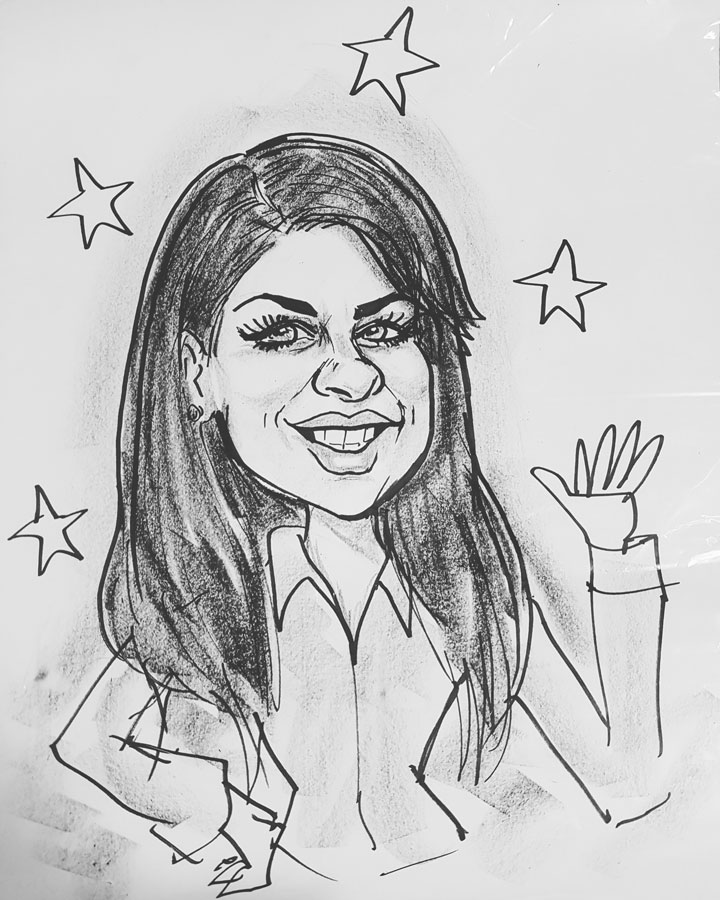
A caricature of Beach Metro reporter, Lara O’Keefe drawn by Pat James
and Queen Street West near Spadina and Peter Street – he says these areas are often windy, polluted, dangerous at times, and lack the tourists required to achieve success. “The current system is biased against street artist improvements and progress,” he said. “It is impossible for many artists to function and earn a reasonable income.”
Portrait and caricature artist James Gain, who studied Fine Arts at OCAD (Ontario College of Art and Design) after graduating from Malvern Collegiate began his career drawing on the streets of Italy.
He said it was shortly after returning home to Canada that he decided he would not be pursuing a career as a street artist.
“I decided to do caricatures because that’s where the money was at that time,” he said. “But to just set up in the streets, it would be very difficult. In Italy, people are very respectful, very understanding with their appreciation…[in Toronto] you have situations where people are coming and asking you for money.”
It’s issues like these that also cause problems for someone like Pat James, who relies largely on the money he makes from his portrait art to maintain a living.
“Seasonal workers like me, we depend on the income from the spring, summer, fall to get by. Different artists have different amounts of commitment … but for me, it’s like a good bulk of my annual income,” he explained.
James, like many of the caricature artists for hire in the city, has found some financial comfort in advertising his services online via his website, ono2funny.com and his Facebook page Toronto Caricature Guy, which are both routinely mentioned when people search online for caricature artists for parties. But that doesn’t stop him from wanting to right what he perceives as wrongs in his industry and the dwindling opportunities for street artists specifically.
“This isn’t just for me,” he said, explaining that he hopes changes to the system will allow new talent to try their hand at making a profit as an artist as well.
Under the current system, busker entertainers pay around $45 for their yearly entertainment permits, while a caricature street artist must pay around $500 for their permit, along with $2-million liability insurance annually.
In addition to this, an online search for insurance policies showed that the liability insurance would cost between $800 to $1,000. These can be steep startup costs for an artist who doesn’t necessarily have a full-time income to fall back on, or a full four seasons worth of income on which to depend.
Yet, because caricature artists fall under a category that is more similar to street vendors – anyone who sells what is defined as “foodstuffs” – they are required to pay higher fees, more in line with those selling consumable goods but who also fall under city food inspection bylaws.
This isn’t his only problem with the city’s bylaw enforcement agency. He says “the current system of bylaw enforcement patrols is negligent in not being consistent and vigilant,” and has noticed many cases of people getting away with operating without permits or operating outside of the guidelines for entire seasons, while other street artists and entertainers are hit with tickets and warnings in the same areas almost immediately.
According to Tracey Cook, executive director with the city’s municipal licensing and standards division, in 2016 the city received 100 complaints related to buskers (no complaints were received regarding portrait artists) and each one was investigated with notices or charges issued if the accused was found to be operating without a permit.
More than a year has passed since James returned to Toronto and began to question the current system. In his opinion, it’s worse than it was when he left 15 years ago to try his luck in Montreal. He has tried to get answers – first, by contacting every one of the 44 councillors in the city in a desperate plea for help – and believes he can provide needed input to city staff. But after numerous emails, phone calls and visits to city hall, he says his requests have gone mostly unanswered.
According to Ward 32 councillor Mary-Margaret McMahon it’s an issue of bureaucracy. “He wanted to depute last year on November 30, but you can’t depute something that’s not on the agenda. So you have to wait until it’s on the agenda and it comes to committee.”
The municipal licensing and standards office said there will be a review of the busking bylaws and permits in 2017/2018.
But unfortunately, McMahon said, no specific date has been provided to her office as to when this review will take place because the agendas are only sent out “a few weeks in advance.”
That 2017/2018 timeline for review, which James is eager to participate so he can share his story with officials, means James is likely out of luck for 2017. New permits are issued March 31, which means if changes are not made by that time he is in for another year of high costs and low earnings.
These difficulties are the reason he said most of the other artists have “given up.”
“This is embarrassing for the much-celebrated music and film industry cultivated in the City of Toronto,” he said. “Most other civilized arts-loving cities love visual artists in the public domain and have sectors of their popular visited locations dedicated to allowing dozens and scores of portrait and caricature artists to draw locals and visitors.”
This post has been updated.